


Speak to a member of our team
Get in Touch
Aldi is one of the fastest-growing supermarket chains in the UK, with plans to expand from over 1,000 stores to 1,500. That growth sits within a much larger global operation, with over 7,000 stores worldwide across Europe and the US.
As that network expands, the demands on the supply chain increase. More stores mean more volume, tighter timelines, and greater pressure on distribution to deliver consistently.
In 2020, Aldi made the decision to invest in a new distribution centre in Bardon, Leicestershire, replacing its existing Sawley facility and consolidating operations from its Atherstone distribution centre, creating a single, more efficient hub designed to streamline distribution and support the next phase of its UK growth.
That level of expansion doesn’t just rely on opening new stores, it depends on having a supply chain that can keep up.
When operations run efficiently at this level, it doesn’t stop at the warehouse. It feeds directly into store performance, ensuring shelves are stocked, products are available when customers expect them, and the overall shopping experience remains consistent and seamless.
The challenge wasn’t just building a new warehouse, it was building one that could handle more volume, more efficiently, at scale.


Automated warehouse picking system that improved efficiency for Aldi by increasing throughput, reducing manual handling and supporting growth.
Aldi’s existing distribution centre at Sawley had reached its operational limits, and its Atherstone site was no longer large enough to support continued growth.
As store numbers increased and demand grew, the existing network was no longer able to deliver the required throughput efficiently. Manual handling processes were creating bottlenecks, increasing pressure on labour, and limiting the speed at which goods could move through the system.
At the same time, expectations around efficiency, sustainability, and cost control were rising. The new Bardon site needed to handle significantly higher volumes, improve picking speed and accuracy, reduce reliance on manual processes, and create a more consistent flow of products through the operation, all while supporting long-term growth without continually increasing labour. In reality, this wasn’t about upgrading equipment. It required rethinking how the entire operation worked.
Hills Electrical Group was engaged by Cimcorp to deliver the mechanical and electrical installation of a fully integrated automated warehouse picking system at Bardon.
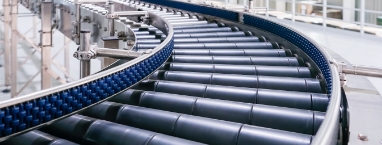
The project combined robotics, conveyor systems, and automated storage into a single operation. At its core was the MultiPick robotic picking system, supported by approximately 2,000 metres of Interroll conveyors and six Swisslog pallet stacker cranes.
The system was new to the UK, requiring close collaboration with Cimcorp specialists and adaptation to new installation methods. The project involved complex coordination across systems, strict safety standards, and detailed commissioning.
In total, the project required approximately 4,000 man-days to complete.
The introduction of an automated warehouse picking system fundamentally changed how the Bardon facility operates.
Instead of relying on manual handling, the system now allows goods to move more efficiently through the warehouse. Picking is faster, more consistent, and far more controlled.
The automated warehouse picking system has:
Most importantly, it allows the site to handle higher volumes without placing additional strain on labour.
The real outcome is a more efficient, scalable operation, built to support growth.
The Bardon facility is one of Aldi’s most significant investments in its UK supply chain.
Spanning 1.3 million square feet on a 72-acre site, it is the retailer’s most energy-efficient warehouse and a key part of its strategy to expand to 1,500 stores nationwide.
By consolidating operations into a single, highly efficient site supported by an automated warehouse picking system, Aldi has created a distribution model that is simpler, more controlled, and better equipped to handle future demand.
For warehouse and operations teams, the question is always the same:
“What will this actually change for us?”
An automated warehouse picking system doesn’t just improve one part of the process, it transforms the way the entire operation works.
It reduces bottlenecks, improves flow, and allows businesses to scale without continually increasing headcount or complexity. Just as importantly, it strengthens everything downstream, helping ensure products are where they need to be, when they need to be there.

At Hills Electrical Group, we specialise in delivering automated warehouse picking system installations that improve operational performance.
If your operation is starting to feel the pressure of increased demand, labour constraints, or inefficiencies in your current setup, we can help you identify where automation will have the greatest impact.
Founded in the Midlands in 2007, Hills Electrical Group delivers automation control systems and electrical installations for complex industrial environments.
We help businesses implement solutions such as automated warehouse picking systems to improve productivity, streamline operations, and increase efficiency.
Using structured delivery methods and platforms such as Procore, we ensure every project is delivered right first time, on time, every time.
Speak to our team to discuss your project and explore how we can support your next phase of growth. Get in touch today by calling 01384 671660.